






1) What is SAP PS?
SAP Project System (SAP PS) helps businesses unlock greater value from their projects by ensuring cost efficiency, effective schedule management, and clear visibility of key performance metrics. It also offers strong integration with finance, logistics, sales, plant maintenance, and other core ERP areas, enabling seamless coordination across all project-related functions
2) Why PS module important in SAP?
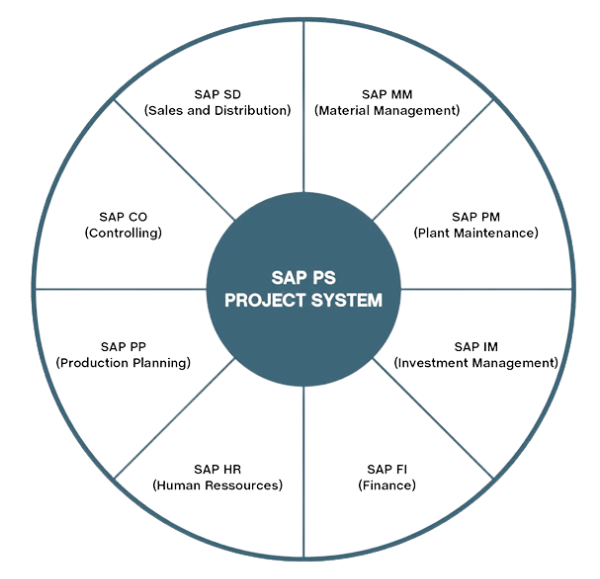
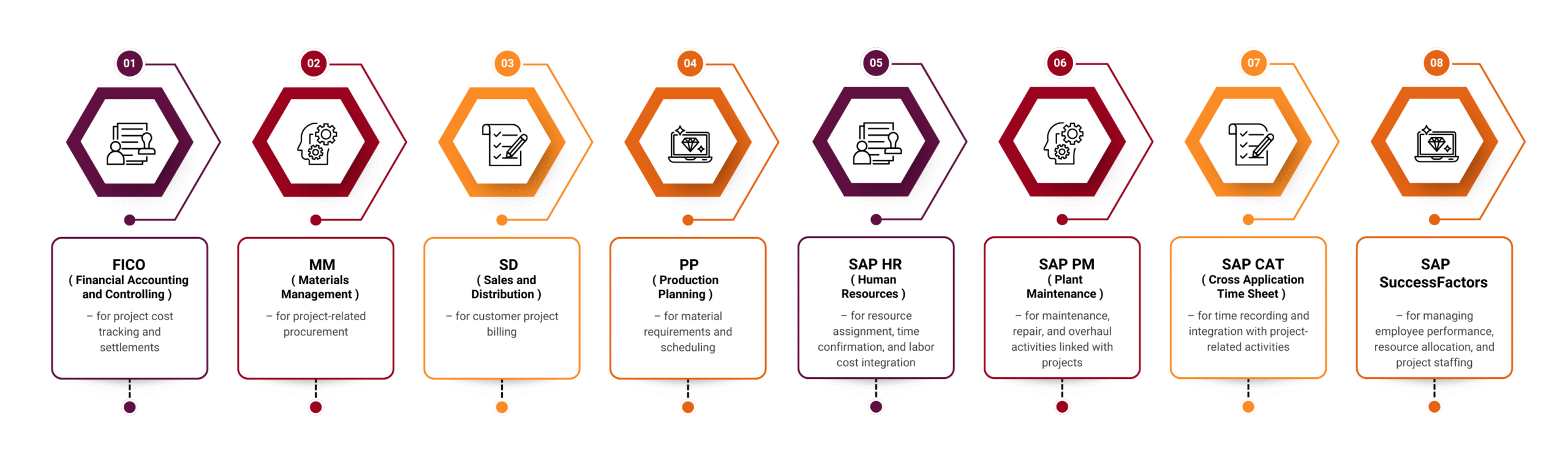
The SAP PS module helps manage all project activities in one place. It tracks costs, time, and resources, ensuring projects are completed on schedule and within budget. It also integrates with other SAP modules like FICO, MM, SD, HR, and PM, making project management more efficient and organized.
3) What is SAP PS and SAP EPPM?
SAP PS (Project System) and SAP EPPM (Enterprise Portfolio and Project Management) work together to manage projects completely — from planning to execution.
SAP PS helps in planning, executing, and controlling individual projects. It makes sure projects are finished on time, within budget, and with full visibility of cost and progress. It covers key areas like budgeting, scheduling, cost planning, and resource management.
SAP EPPM, on the other hand, looks at the bigger picture. It helps companies plan, prioritize, and manage multiple projects as per business goals, budgets, and capacity. In simple terms, EPPM focuses on what projects to do and why, while PS focuses on how to do them.
Both PS and EPPM work together in SAP S/4HANA, which means all updates are seen in real-time. When a project is approved in EPPM, it moves to PS for detailed planning, scheduling, assigning people, tracking costs, and monitoring progress.EPPM also integrates with tools like Microsoft Project, Primavera, SAP PLM, SAP Fiori, SAP Analytics Cloud, and Microsoft Teams — making it easier for teams to plan better, collaborate, and monitor project performance effectively.
4) Which SAP modules can be integrated or configured with it ?
SAP PS integrates with multiple core SAP modules, including:
5) With which technologies can SAP PS be used?
SAP PS can be implemented with several SAP platforms and technologies:
SAP S/4HANA
– the latest and most efficient in-memory ERP suite
SAP Cloud Platform
– for cloud-based project and portfolio management
SAP ECC (ERP Central Component)
– traditional SAP ERP system
SAP EPPM
– for integrated enterprise-level portfolio management
6) In which industries it can be used?
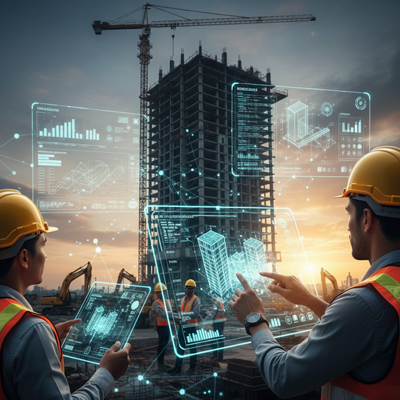
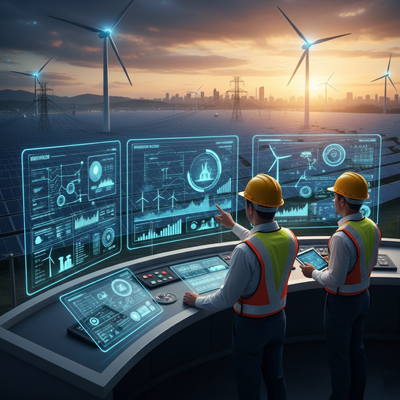
SAP PS and EPPM are applicable across a wide range of industries, such as:
7) What are the different types of projects managed in SAP PS?
In SAP Project System (PS), project types are used to define the purpose, nature, and financial behaviour of a project.
Each project type controls how the system treats costs, revenues, budgeting, and reporting.
They also help organizations categorize projects based on business needs, such as internal work, customer orders, or capital investments.
types of projects in SAP PS:
a) Capital Projects
- Used for large investments like constructing a new plant, office, or factory, or purchasing heavy machinery.
- The main goal is to create or improve a company asset.
- All costs are capitalized, meaning they are transferred to a fixed asset once the project is completed.
- Example: Building a new production facility or upgrading an existing one.
b) Customer Projects
- Used for projects carried out for external customers.
- These are linked with Sales and Distribution (SD) and Controlling (CO)
- The purpose is to deliver a product or service and generate revenue.
- Costs and revenues are recorded and monitored throughout the project.
- Example: Delivering an engineer-to-order (ETO) project or providing IT implementation services for a client.
- Can include milestone billing, progress billing, and resource tracking
c) Investment Projects
- Similar to capital projects but used mainly for long-term financial planning and control.
- Focuses on investment budgets and approval processes.
- Useful for tracking planned vs. actual investment
- Example: Expansion projects, energy efficiency initiatives, or digital transformation programs.
d) Maintenance Projects
- Used for equipment repairs, maintenance, or plant shutdown activities.
- Integrated with Plant Maintenance (PM) and Material Management (MM)
- Helps plan materials, manpower, and time required for maintenance work.
Example: Annual machine overhaul or preventive maintenance project.
8) RISE with SAP and Cloud-Based Services in SAP PS?
RISE with SAP is a cloud-based solution that helps companies move their SAP systems, including SAP Project System (PS), to the cloud.
It combines SAP S/4HANA Cloud, SAP Business Technology Platform (BTP), and other managed services into one package, making project management faster, smarter, and more flexible.
Benefits of using SAP PS with RISE and Cloud Services:

Scalable and Flexible
Easily adjust resources for small or large projects.

Real-Time Access
Teams can work together from anywhere, anytime.

Quick Setup
Cloud templates make it faster to start new projects.

Better Insights
Tools like SAP Analytics Cloud provide reports on cost, risk, and progress.

Cost Savings
Reduces the need for expensive hardware and maintenance.

Always Updated
New features and updates are added automatically.

Smart Integration
Works with AI, IoT, and automation for improved tracking and decision-making.

Modern User Experience with Fiori
SAP Fiori apps provide a simple, role-based, and responsive interface for project managers and team members, making it easier to monitor project progress, costs, and deadlines directly from any device.

