

In this current era, SAP is not only an ERP system but is the backbone of business operations. Companies need SAP to operate efficiently and seamlessly in various departments such as finance and accounting, logistics, human resource management, and manufacturing. However, to ensure that companies operate efficiently, much more should be done apart from just monitoring.
Why SAP Technical Upgrades Matter
The SAP environment is always evolving due to new technological advancements and business requirements. Operating within an older system will lead to challenges in the areas of integration, performance, security, and compatibility.
An SAP technical upgrade refers to an upgrade of either the SAP application release, database, operating system, kernel, or underlying infrastructure. Sometimes businesses may require preparation of their landscape for other change initiatives such as migrating from SAP ECC to S/4HANA.
The objective is not simply to install a newer version. A successful upgrade should improve system performance, strengthen security, support business continuity, and create a more flexible foundation for future innovation.
What Is SAP Patch Management?
While upgrades are typically larger planned activities, patch management is an ongoing process. SAP patches, security updates, kernel updates, support packages, and corrections help address vulnerabilities, resolve known issues, and maintain system stability.
Without a structured patching approach, organizations may accumulate technical debt and expose their systems to avoidable operational and security risks.
Effective patch management involves identifying relevant updates, evaluating their impact, testing them in controlled environments, and deploying them systematically. This ensures that maintenance activities do not unexpectedly affect critical business processes.
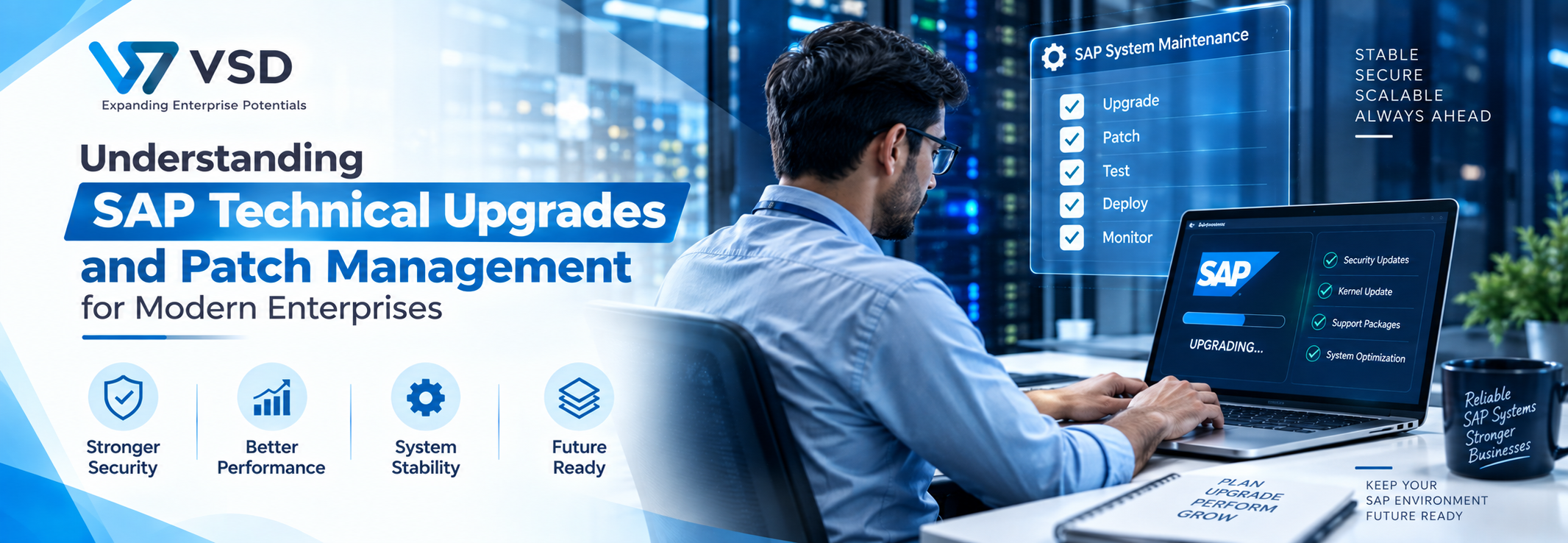
A Practical Approach to SAP Upgrades and Patching
A well-planned maintenance strategy generally involves several stages:
- System Assessment
Before making changes, technical teams assess the existing SAP landscape, including system versions, databases, custom developments, integrations, dependencies, and infrastructure. This helps identify compatibility concerns before implementation begins.
- Planning and Impact Analysis
Not every update should be applied immediately without evaluation. Organizations should understand what an upgrade or patch changes and how it may affect business-critical applications, custom code, interfaces, and connected systems.
- Testing
Testing is one of the most important stages of the process. Updates should first be implemented in development and quality environments. Functional and technical testing can then identify issues before changes reach production.
- Controlled Deployment
Once testing is completed, the approved changes can be deployed to the production environment according to a carefully planned schedule. Proper backups, rollback plans, and downtime planning can further reduce operational risks.
- Post-Upgrade Monitoring
The process does not end after deployment. Performance, system logs, integrations, background jobs, and business processes should be monitored to ensure that the updated environment is functioning as expected.
Benefits for Modern Enterprises
A methodical process of upgrades and patches may offer the following advantages:
– Improved security posture.
– Higher performance levels.
– Minimised chances of disruption.
– Compatibility with future technologies.
Moreover, such a strategy will allow an organisation to stay compliant with its regulations and decrease potential risks of using unsupported software. Most importantly, a well-managed SAP landscape enables an organisation to be more confident in the adoption of new features.
Choosing the Right SAP Technical Partner
Maintenance for SAP systems needs skill, planning, and knowledge about business processes. Experts can assist organizations in assessing their SAP environment, planning, applying upgrades, applying patches, doing testing, and validating the performance of the upgraded systems.
VSD Technologies offers technical services in SAP that include upgrading, applying patches, upgrading the SAP kernel, migration, administration, and performance management. Their philosophy lies in doing so without any disruptions to their customers.
Conclusion
SAP technical maintenance should not be treated as an occasional IT task. For enterprises that depend on SAP every day, upgrades and patching are part of a continuous strategy for security, performance, and business continuity.
With proactive planning, thorough testing, controlled deployment, and ongoing monitoring, organizations can keep their SAP landscape reliable today while preparing it for tomorrow’s requirements.
Looking to strengthen your SAP environment? Connect with VSD Technologies to plan a structured approach to SAP upgrades, patches, and ongoing technical support.
📩 Contact us today to start your automation journey.
🌐 www.vsdtechnologies.com